
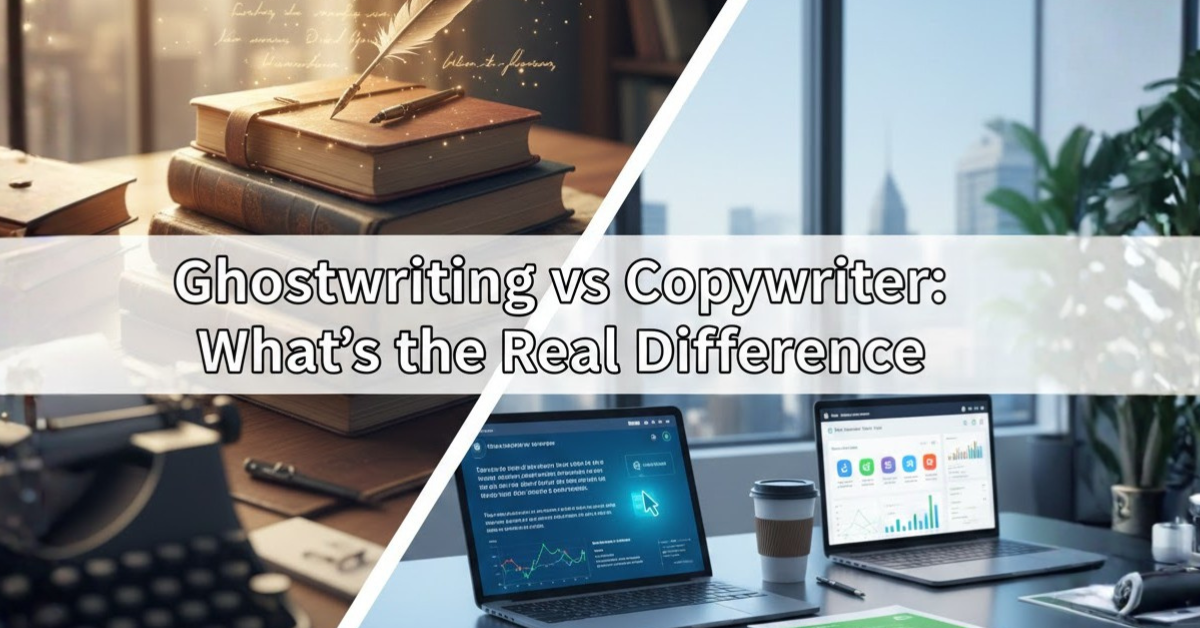
Ghostwriting vs Copywriter: What’s the Real Difference?
When you need professional writing support, the first question that comes to mind is usually ghostwriting vs copywriter — which one is right for my project? Both roles are essential in the content world, but they serve completely different purposes. This guide breaks down the differences in a simple, clear way so you can choose the right writer for your goals.
You’ll learn what each professional does, how they work, what their responsibilities include, and how their work impacts businesses, authors, and brands.
What Is Ghostwriting?
Ghostwriting involves writing content on behalf of someone else while remaining anonymous. The client becomes the public author, while the ghostwriter handles:
- Books (nonfiction, memoirs, autobiographies)
- Articles and long-form content
- Speeches
- Thought-leadership content
- Ebooks
Ghostwriters master the client’s voice, tone, and style. Their goal is to make the writing feel 100% like the author, even though they created it.
What Is Copywriting?
Copywriting is the craft of writing persuasive, action-focused content. A copywriter’s job is to influence decisions, spark interest, and drive conversions. They specialize in:
- Ad copy
- Website content
- Email marketing
- Social media posts
- Sales pages
- Brand messaging
Copywriters focus on persuasion, clarity, and psychology. Their writing prompts the audience to:
- Buy
- Subscribe
- Click
- Sign up
- Take action
Unlike ghostwriting, copywriters usually receive public credit — their writing is part of a visible brand strategy.
Ghostwriting vs Copywriter : What’s the Difference?
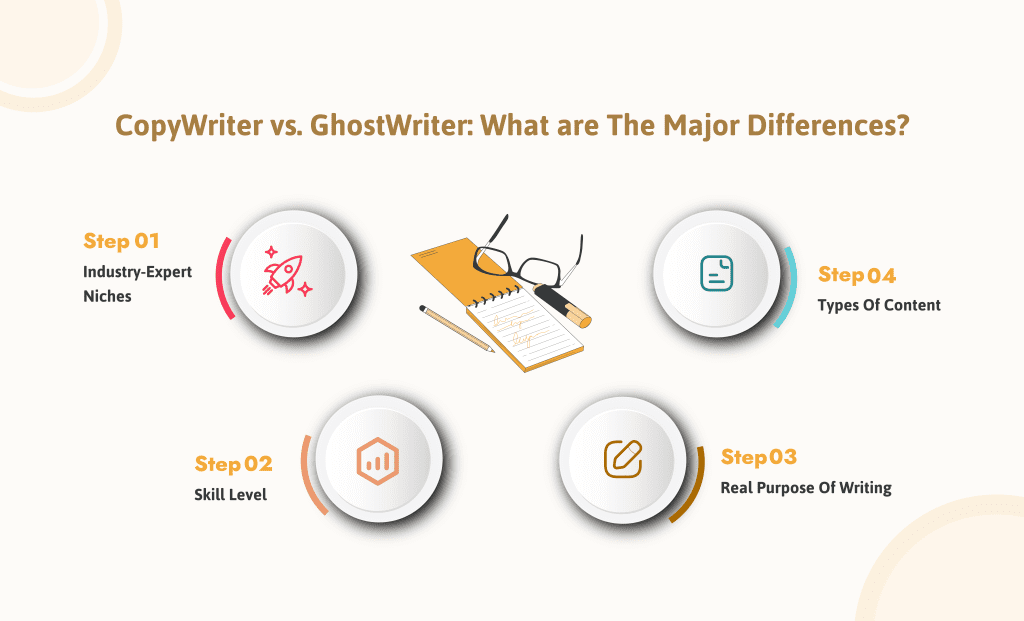
Here is a clear, simple breakdown of ghostwriting vs copywriter so you can see how they differ:
Purpose
- Ghostwriter: Creates long-form, personal, in-depth content
- Copywriter: Creates short, persuasive, action-driven content
Audience
- Ghostwriter: Readers seeking stories, knowledge, or depth
- Copywriter: Potential customers, buyers, and leads
Credit
- Ghostwriter: Remains anonymous
- Copywriter: Often receives visible credit
Style
- Ghostwriter: Narrative, descriptive, story-driven
- Copywriter: Concise, punchy, emotional, sales-focused
These distinctions help you decide which writer fits your needs.
Which Is Better: Copywriting or Ghostwriting?
Neither is “better” — the right choice depends on your project.
Choose a Ghostwriter if you need:
- A book
- A memoir
- Long-form articles
- Thought leadership content
- A speech or professional story
Choose a Copywriter if you need:
- Marketing campaigns
- Product descriptions
- Website content
- Sales funnels
- Email marketing sequences
Each role has a different purpose, audience, and writing approach.
Key Responsibilities of Ghostwriters and Copywriters
Understanding their responsibilities helps you choose wisely.
Ghostwriter Responsibilities
- Conduct detailed research
- Interview clients to capture voice and tone
- Draft and revise long-form content
- Maintain strict confidentiality
- Organize complex stories into structured writing
- Collaborate closely with clients for authenticity
Copywriter Responsibilities
- Write persuasive, conversion-focused content
- Apply SEO techniques for online visibility
- Create engaging headlines and hooks
- Understand buyer psychology
- Develop brand messaging
- Optimize content for sales and marketing funnels
Both roles require skill, but their goals are different.
Who Earns More: Copywriters or Ghostwriters?
Ghostwriters usually charge more per project because their work is time-consuming, requires interviews, and involves deep research. Books or complex long-form projects command higher rates.
Copywriters, however, often have consistent monthly clients, allowing them to earn stable, recurring income.
Quick Summary:
- Ghostwriters: Higher one-time project fees
- Copywriters: Frequent and recurring income streams
Both roles can be highly profitable depending on niche and experience.
Is Ghostwriting More Expensive than Copywriting?
Yes. Ghostwriting is typically more expensive because:
- Projects are longer
- Work requires research
- Multiple drafts are needed
- Confidentiality is essential
- The ghostwriter writes in your exact voice
Copywriting projects (ads, emails, short campaigns) require less time and carry lower overall cost.
Factors That Influence Earnings
Both ghostwriters and copywriters can increase their rates based on:
- Niche (finance, health, tech, etc.)
- Expertise level
- Client industry
- Reputation
- Past results
- Demand for their writing style
Skilled writers build strong portfolios and raise rates as their experience grows.
Ghostwriter or Copywriter Which Role Is Better for Businesses?
It depends on your business goals.
Ghostwriter is best for:
- Brand authority
- CEO/Founder storytelling
- Long-form content
- Books and thought leadership
Copywriter is best for:
- Generating sales
- Increasing conversions
- Marketing campaigns
- Website and ad copy
Startups benefit greatly from copywriters.
Established brands benefit from ghostwriters for leadership content or books.
How Copywriting Supports Brand Growth
Effective copywriting builds:
- Brand trust
- Audience engagement
- Customer loyalty
Copywriters use psychology, emotion, and clarity to create messages that inspire action.
Examples like Apple, Nike, and Coca-Cola highlight the power of strong copywriting in shaping brand identity.
How to Choose Between a Ghostwriter and a Copywriter
Here’s a simple decision guide:
Choose a Ghostwriter if you need:
- Long-form content
- A personal story
- A memoir
- A nonfiction book
- Deep industry insights
Choose a Copywriter if you need:
- Ads
- Marketing content
- Email sequences
- Website content
- Product copy
Quick Checklist:
✔ What is your goal?
✔ Who is the audience?
✔ How long is the project?
✔ Do you need persuasion or storytelling?
Why Many Clients Prefer Ghostwriters
Clients choose ghostwriters when they want:
- Privacy
- Storytelling depth
- Professional quality
- Life stories preserved
- Books written without taking years
Ghostwriters handle the emotional, structural, and creative work while the client becomes the “author.”
Can a Ghostwriter Also Be a Copywriter?
Yes — many ghostwriters can do copywriting and vice versa. Writing skills overlap, especially in tone, clarity, and audience understanding.
A ghostwriter might write:
- A book for an author
- Marketing copy for the same book launch
This versatility makes them valuable across multiple writing styles.
Ghostwriting vs Copywriting for Books
Ghostwriters excel at books because:
- They understand long-form structure
- They maintain confidentiality
- They capture an author’s voice
- They plan chapters with clarity
- They build stories over months, not hours
Copywriters specialize in short-term, marketing-focused writing, not long-form manuscripts.
Why Ghostwriters Handle Confidential Projects
Ghostwriters are hired for:
- Memoirs
- Speeches
- Autobiographies
- Executive content
- Private writings
These projects require trust and discretion.
The ghostwriter ensures the client’s identity remains protected.
Is Ghostwriting More in Demand than Copywriting?
Demand depends on the industry:
- Ghostwriting: High demand in publishing, personal branding, and thought leadership
- Copywriting: Extremely high demand in digital marketing, ecommerce, and advertising
Copywriting demand is larger because businesses rely on continual marketing, but ghostwriting demand is stable and often high-paying.
Conclusion
When deciding between ghostwriting vs copywriter, the right choice depends entirely on your goals. Ghostwriters specialize in long-form, confidential storytelling, perfect for books, memoirs, and thought-leadership content. Copywriters create persuasive marketing messages that drive sales, engagement, and conversions.
Both roles are essential, but they serve different purposes. If you need polished content that captures your story, or persuasive writing that grows your brand, The US Writers can support you with professional ghostwriting and copywriting services tailored to your vision.