
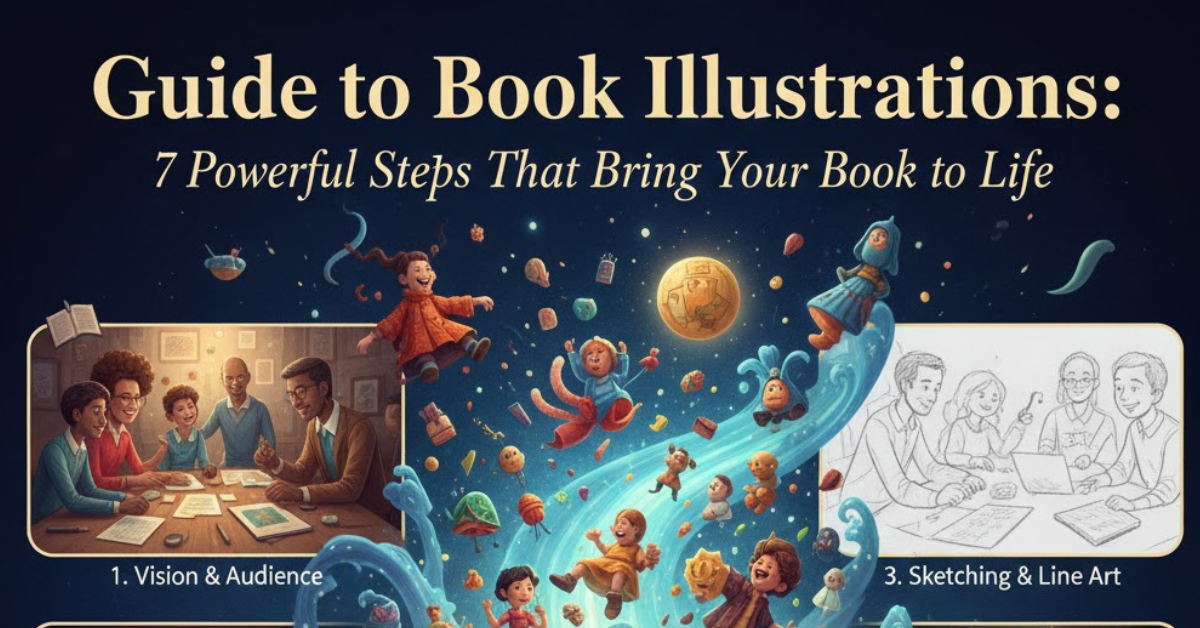
Guide to Book Illustrations: 7 Powerful Steps That Bring Your Book to Life
If you’re writing a children’s book, a graphic-heavy nonfiction guide, or even a novel that needs a few interior visuals, illustrations can be the difference between “nice idea” and “finished, professional book.” But most first-time authors don’t struggle with creativity—they struggle with the process: how to choose a style, how to brief an illustrator, how much it costs, how long it takes, and how to avoid expensive misunderstandings.
This Guide to Book Illustrations is designed for U.S.-based authors and publishers who want clarity without getting overwhelmed. You’ll learn the full book illustration process, what impacts book illustration cost, what to include in an illustration brief, and how to manage revisions and rights. At the end, you’ll also see how US Writers supports authors with illustration planning and production—without sending you off to third-party platforms.
What are book illustrations?
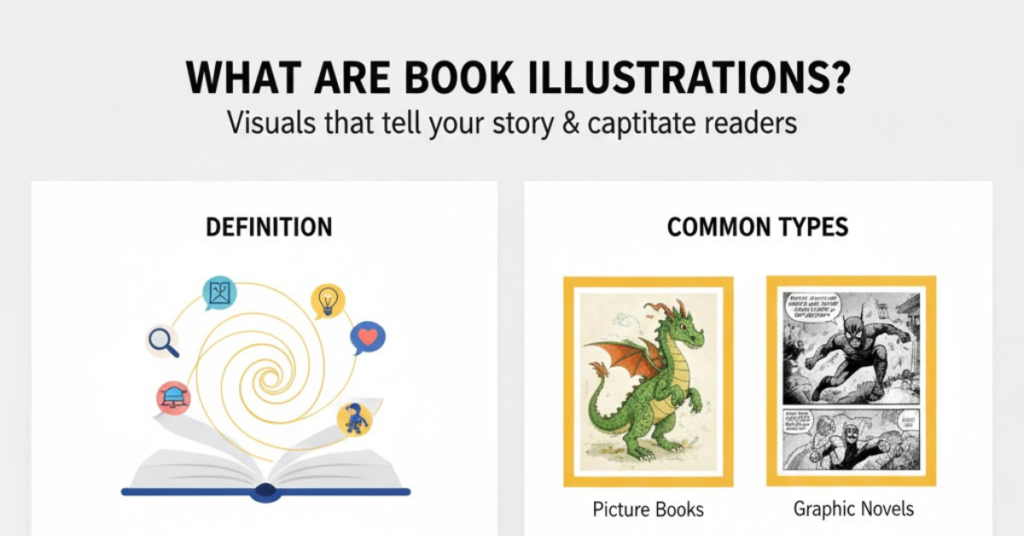
Book illustrations are visual elements created to support the reading experience. They can:
- help children understand and enjoy the story
- clarify steps in nonfiction (recipes, how-to guides, workbooks)
- create emotional connection through character design and mood
- strengthen your brand across a series
In short: illustrations aren’t decoration. They’re communication.
And when done well, they raise perceived value—meaning readers feel the book is more premium and gift-worthy, especially in children’s publishing.
Book cover illustration vs interior book illustrations
A common misconception is that cover art and interior art are “the same job.” They overlap, but the goals are different.
Book cover illustration
A book cover illustration is marketing-first:
- It must communicate genre, tone, and audience instantly
- It needs a strong focal point at thumbnail size
- It works hand-in-hand with typography and layout
Interior book illustrations
Interior book illustrations are reading-first:
- They support story moments or learning steps
- They must stay consistent across pages (characters, color palette, style)
- They need to fit within page layout and printing constraints
Treat them as two related deliverables—often requiring different planning, and sometimes different specialists.
Types of books that benefit most from illustrations
Illustrations can serve almost any book, but they’re especially valuable for:
- Children’s book illustrations (picture books, early readers, chapter books with spot art)
- Educational books (workbooks, language learning, test prep)
- Nonfiction guides (how-to, crafts, DIY, cooking, fitness)
- Journals and prompts books (icons, section dividers, theme visuals)
- Fiction with maps, symbols, or chapter ornaments (fantasy, historical, special editions)
If your reader needs visual guidance—or if the book is purchased as a gift—illustrations often pay off.
Choosing illustration styles for books
When authors say “I want it to look professional,” they usually mean: I want it to match the audience and feel consistent.
Here’s a simple way to choose illustration styles for books without overthinking it:
1) Start with your reader’s age and expectations
- Ages 3–6: bold shapes, clear expressions, bright and warm palettes
- Ages 6–9: more detail, playful action, expressive character design
- Middle grade: fewer full spreads, more spot illustrations, clean line art
- Nonfiction: clarity first—diagrams, consistent icons, readable visuals
2) Decide the emotional tone
Is it:
- cozy and gentle?
- funny and energetic?
- mysterious and moody?
- modern and minimal?
Tone affects line quality, color choices, and composition.
3) Match your story’s “visual language”
A city story and a woodland story can both be beautiful, but they don’t look the same. Setting influences palette, texture, and detail.
4) Build a mini style guide (even if it’s simple)
A style guide is just a one-page reference that keeps the art consistent:
- main character proportions
- recurring objects (pet, toy, backpack, etc.)
- color palette references
- “do/don’t” notes (e.g., “no harsh shadows,” “soft watercolor feel”)
Consistency is what makes your illustrations feel like a real book, not a collection of random images.
How to illustrate a book
A professional book illustration process usually follows these stages:
Step 1: Planning and scope (what exactly are you illustrating?)
Before any drawing begins, define:
- number of illustrations needed
- whether they are full-page, half-page, or spot art
- whether you need a cover illustration, interior illustrations, or both
- your trim size (book size) and general layout plan
This step matters because scope drives timeline and cost.
Step 2: Mood board + reference direction
You don’t need to be “artistic” to do this well. You only need clarity:
- colors you like
- examples of the vibe (soft, bold, retro, modern)
- examples of character energy (shy, playful, adventurous)
Step 3: Character design (and key environment elements)
For children’s books especially, character design is the foundation:
- facial expressions
- proportions
- clothing details that stay consistent
- how the character looks from different angles
Step 4: Thumbnails / rough sketches (storyboarding)
This is where the book becomes visual. Rough sketches:
- map each illustration to the text
- set scene composition and movement
- ensure the visuals match story pacing
It’s cheaper to adjust at sketch stage than after full color rendering.
Step 5: Line art (clean drawing)
Once sketches are approved, line art creates structure and clarity.
Step 6: Color + rendering (final art)
This is where the book looks “real.”
Color choices should support readability and mood, especially for children.
Step 7: Final files and handoff
You’ll receive print-ready files, plus any extras (transparent PNGs for marketing, etc.). You also finalize credits and rights.
How many illustrations does a children’s book need?
There isn’t one universal number, but here are realistic patterns:
- Picture books: often illustrated on most spreads
- Early readers: fewer full scenes, more spot illustrations
- Chapter books: occasional spot art or chapter openers
The right number depends on:
- age range
- word count and pacing
- whether the story relies on visuals to “carry” meaning
A practical approach: start by mapping illustrations to story beats (moments of change, emotion, or action). That creates a scope that feels purposeful rather than random.
Book illustration cost
Book illustration cost varies widely, and that’s normal. Pricing changes based on:
- number of illustrations (scope)
- complexity (simple backgrounds vs detailed scenes)
- style (flat color vs fully rendered painterly)
- timeline urgency (rush fees)
- revision rounds
- rights and usage terms (license vs full ownership arrangement)
Instead of focusing only on “per page,” ask for a quote that clearly lists:
- deliverables (cover + interior count)
- what’s included (sketches, color, revisions)
- timeline and milestones
- payment schedule
This keeps your project predictable and avoids surprise costs.
The illustration brief: what to send so the artist can succeed
A strong illustration brief for book projects is simple, specific, and reader-focused.
Include:
- book title + target audience (age range or reader type)
- short summary of the story
- main character descriptions (appearance + personality)
- setting notes (time/place, recurring locations)
- illustration list (page/spread + what needs to be shown)
- style direction (mood, palette, references)
- any “must include / must avoid” notes
- timeline and your preferred review process
A brief doesn’t need to be long. It needs to be clear.
Revision rounds: what’s normal and how to manage them
Revisions are expected. What causes problems is vague revision requests.
Best practice:
- keep revisions structured (one consolidated feedback message per round)
- review sketches carefully before approving color
- use clear notes (“Make the character’s hair darker and add a red backpack”)
Most projects work smoothly when revisions happen early (sketch stage) and become lighter later (small polish changes at final stage).
Rights and ownership
You don’t need to be legal-heavy, but you do need clarity.
Make sure you understand:
- where you can use the illustrations (book + marketing + merchandise, if applicable)
- whether you receive full rights or a defined license
- whether the illustrator can display the work in their portfolio
Put it in writing. It protects both sides and prevents misunderstandings later.
When to do it yourself vs hiring book illustration services
DIY can work if:
- you already illustrate at a publishable level
- your book is low-stakes (personal project, family keepsake)
- your timeline is flexible
Hiring book illustration services makes sense if:
- you want professional consistency across the whole book
- you’re publishing for the market (not just personal use)
- you need clear process management, deadlines, and quality control
- you want the visuals to elevate the book’s value (especially children’s books)
Most authors who want sales and reviews long-term choose professional help—because illustrations are a big part of reader trust.
Conclusion
A strong illustration plan is one of the easiest ways to make your book feel professional, consistent, and market-ready—especially for children’s book illustrations. When you define scope, choose a style that matches your readers, and follow a clear book illustration process, you avoid delays, budget surprises, and mismatched visuals.
If you want hands-on support planning and producing your illustrations, US Writers can guide the full process—from scope and briefing to revisions and final delivery—so your visuals match your story and your publishing goals.
FAQs: Guide to Book Illustrations
1) What is a complete Guide to Book Illustrations supposed to cover?
A complete Guide to Book Illustrations explains the illustration types (cover vs interior), style selection, the book illustration process, budgeting, timelines, revision management, and rights—so authors can plan and execute without confusion.
2) What’s the difference between book cover illustration and interior book illustrations?
Cover illustration sells the book at a glance and must communicate genre and audience quickly. Interior illustrations support the reading experience and must stay consistent across pages and scenes.
3) How many illustrations does a children’s book typically need?
It depends on the age range and story structure. Picture books often use illustrations across most spreads. Early readers and chapter books generally use fewer illustrations, often spot art or chapter openers.
4) How much do book illustrations cost in the U.S.?
Costs vary based on scope, complexity, style, timeline, and revision rounds. The best way to estimate is to define your illustration list first, then request a quote based on clear deliverables.
5) What should be included in an illustration brief for a book illustrator?
Include audience, story summary, character descriptions, setting notes, an illustration list, style direction, revision expectations, and a timeline. Clear briefs prevent costly rework.