
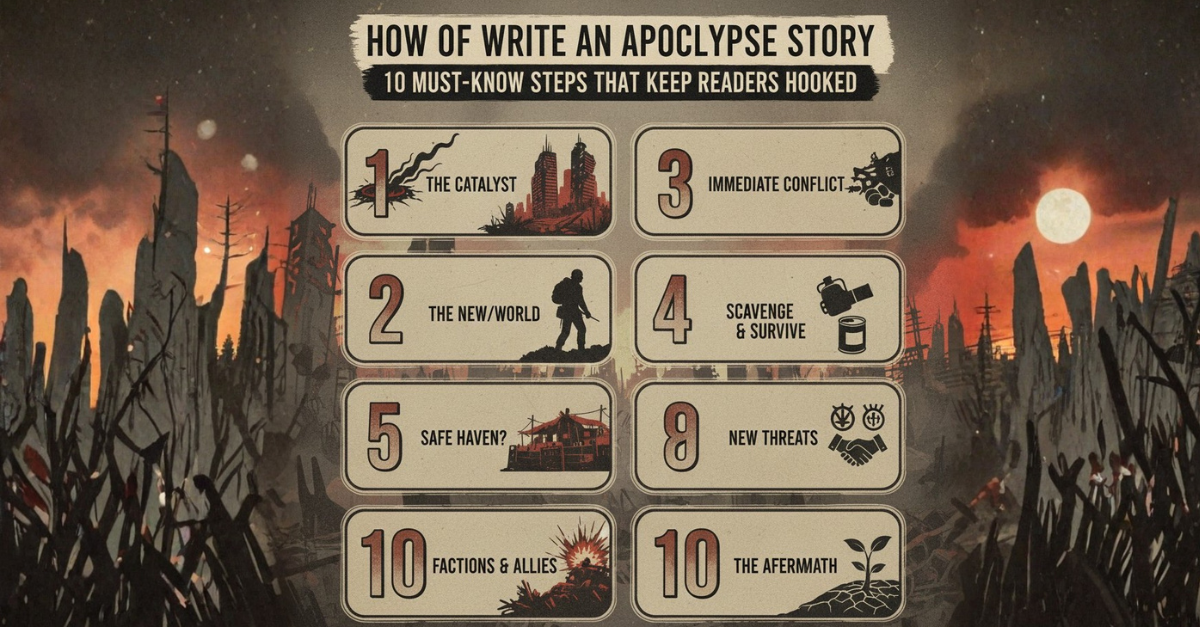
How to Write an Apocalypse Story: 10 Must-Know Steps That Keep Readers Hooked
If you’re searching how to write an apocalypse story, you probably already have the big image in your head: empty highways, a sky that looks “wrong,” a world where the rules we rely on quietly disappear. But turning that image into a story readers can’t put down takes more than destruction and danger. The best apocalyptic fiction writing isn’t really about the end of the world—it’s about what people do when the world ends.
This guide will walk you through a practical, story-first approach to how to write a post apocalyptic story with strong characters, believable apocalypse worldbuilding, and an outline that keeps tension rising. It’s written for readers and writers, so the examples and logic fit American settings, culture, and familiar survival realities, without getting overly technical or turning into a survival manual.
What makes an apocalypse story different from dystopian fiction?
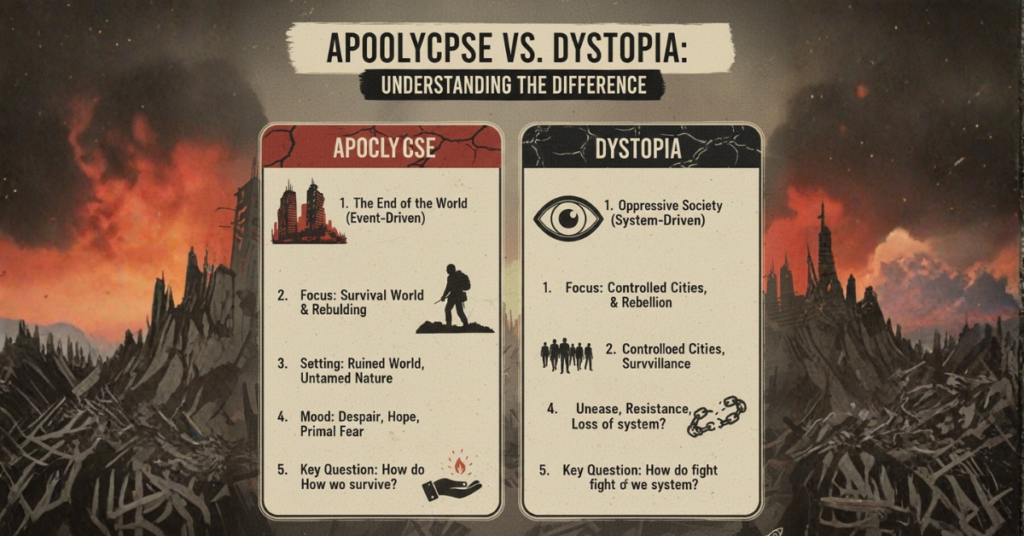
This is one of the first things to get clear on, because it shapes your entire story.
A dystopian story usually shows a functioning society that’s oppressive—there are rules, institutions, systems, and control. A post apocalyptic story shows what happens after a collapse, when the old systems are gone or barely hanging on. The tension in dystopian fiction is often “the system vs the individual.” The tension in post-apocalyptic fiction is often “survival vs morality,” “community vs isolation,” or “hope vs despair.”
If your world still has a working government, surveillance, and structured power, you may be closer to dystopian. If your world is fractured—barter, scavenging, factions, shortages—you’re in post-apocalyptic territory.
Step 1: Choose your apocalypse scenario
A strong apocalypse doesn’t need to be the most original idea on earth. It needs to create a specific kind of pressure that forces choices.
Common “cause of collapse” options include:
- a pandemic or medical failure
- war or large-scale attacks
- climate-driven breakdown
- AI or technological collapse
- alien or supernatural events
The key is not the cause—it’s the consequences. When you choose your scenario, decide what it breaks first:
- communication?
- supply chains?
- trust between neighbors?
- access to medicine?
- electricity and fuel?
Those broken things become your plot engine.
A useful shortcut: write one sentence about the apocalypse that includes the human cost.
“After a sudden grid failure, cities become traps, and people discover they don’t know their neighbors as well as they thought.”
That sentence is already a story.
Step 2: Pick your timeline: during the collapse or after?
This decision changes the entire reading experience.
Option A: “During the fall” (high urgency, fast tension)
You’re writing the first days or weeks—sirens, panic, rumors, misinformation, and quick decisions. This is great for immediate hooks and emotional intensity.
Option B: “After the fall” (worldbuilding, factions, longer arcs)
You’re writing months or years later—new rules, new economies, and survival routines. This is where post apocalyptic worldbuilding can shine, because the reader sees what humanity rebuilt (and what it didn’t).
You can also blend both: open with the collapse, then jump forward to show the transformed world.
Step 3: Create characters who can’t survive without changing
A survival story becomes unforgettable when survival forces transformation. In survival story writing, your protagonist shouldn’t just be “tough.” They should be tested in a way that pushes their identity.
Ask yourself:
- What do they want besides survival?
- What belief do they cling to?
- What line do they swear they won’t cross?
- What would break them—or change them?
Your apocalypse is the external pressure. Your character arc is the internal pressure. When both pressures tighten together, your story feels inevitable and emotionally satisfying.
A simple character arc in apocalyptic fiction writing often looks like:
- “I can do this alone” → learns community is survival
- “Rules keep us safe” → learns morality is what remains
- “Hope is naive” → learns hope is a strategy
Step 4: Build apocalypse worldbuilding that feels believable
Worldbuilding in post-apocalyptic fiction is not about listing ruined buildings. It’s about answering one practical question: How do people live now?
Focus on a few “survival pillars,” and weave them into scenes naturally:
- Water (access, purification, control)
- Food (rationing, farming, scavenging, hunting)
- Medicine (limited supplies, injury risk, infection)
- Shelter (defense, weather, location choices)
- Security (trust, threats, rules)
- Community (alliances, betrayal, shared labor)
In a U.S.-based setting, you can also play with familiar contrasts:
- suburbs vs cities
- small towns vs interstates
- rural space vs urban density
- “everyone armed” assumptions vs real-world consequences
- the difference between having supplies and having skills
A believable world isn’t always brutal nonstop. It has routines. It has small moments that feel almost normal—and that’s what makes the danger sharper when it returns.
Step 5: Choose your structure
Many post apocalyptic story ideas fall into recognizable story structures. That’s not a bad thing. Structures help you control pacing.
Here are five strong options:
1) Road story
The characters travel through a fractured world. Each location reveals a new version of survival. Great for variety and escalating threat.
2) Siege story
One place, under pressure. Limited supplies. Trust issues. Great for tension and moral dilemmas.
3) Bunker story
Claustrophobic, psychological, secrets and control. Great if you want character-driven conflict.
4) Mission story
A clear objective (find medicine, rescue someone, deliver something). Great for plot clarity and momentum.
5) Survival journal
First-person entries, personal voice, intimacy. Great for emotional realism and a strong hook.
Pick the structure that matches the emotional experience you want readers to have.
Step 6: Write a post apocalyptic story outline that keeps stakes rising
You don’t need a complicated outline—just a clean escalation.
A practical apocalypse story outline could look like this:
Opening: Show normal life with a crack in it—something already wrong.
Inciting incident: The event forces immediate action.
Early survival: The protagonist makes a plan, but it fails fast.
Midpoint shift: A major discovery changes what “survival” means (new faction, betrayal, a hidden truth).
Escalation: Choices become morally expensive; safety becomes conditional.
Climax: A forced decision—save one person or the group, take the risk or lose everything.
Resolution: A new normal is established—hopeful, tragic, or bittersweet, but earned.
If you keep raising the cost of choices, you won’t need constant action scenes. The pressure will do the work.
Step 7: Use tropes without writing clichés
Yes, there are common tropes in post-apocalyptic fiction. Readers often like them—if you make them feel fresh.
Common tropes:
- found family
- the reluctant leader
- factions competing for resources
- a safe place that isn’t safe
- the moral choice that scars everyone
The trick is to add specificity:
- a unique setting (not just “abandoned city”)
- a unique social rule (how people trade, punish, protect)
- a unique emotional stake (what your character refuses to lose)
Cliché is not “a trope exists.” Cliché is when nothing surprising happens inside it.
Step 8: Write survival details realistically—but don’t turn it into a manual
Readers want believability, but they don’t want homework. You can make survival feel real with light touches:
- characters argue about risk, not just action
- injuries have consequences
- food and sleep affect decision-making
- small mistakes create big problems
A simple way to avoid “too lucky” scenes:
If your characters get something valuable (food, shelter, vehicle), make them pay for it:
- time
- injury
- trust
- moral compromise
- debt to a group
That “cost” makes the world feel consistent and removes plot armor.
Step 9: Control tone: hope vs despair
Apocalypse stories often sit on a spectrum:
- grim survival (harsh, bleak, morally brutal)
- resilient survival (hard, but human connection matters)
- rebirth (the old world dies; something new begins)
U.S. readers often respond strongly to stories where hope is earned—not handed out. A hopeful ending can still be intense, as long as it feels like it cost something real.
Step 10: End your apocalypse story with an ending that feels earned
A good ending in a post-apocalyptic story doesn’t have to “fix the world.” It has to complete the character’s emotional journey.
Strong ending types:
- earned hope: safety exists, but it’s fragile and chosen
- bittersweet: a win with a scar
- tragic clarity: survival at a moral cost
- open door: the world continues, and the next challenge is visible
The reader should feel: “Of course this is how it ends. It couldn’t have ended any other way.”
How US Writers Can Turn Your Apocalypse Idea into a Novel
Apocalyptic fiction can be challenging because it requires balance: action, emotion, believable worldbuilding, and pacing that doesn’t stall. If you have a strong idea but you’re stuck—outline, middle sag, inconsistent logic, or scenes that feel repetitive—professional help can shorten the path from concept to completion.
At US Writers, authors usually ask for:
- concept development (scenario + stakes + theme)
- post apocalyptic story outline creation (clean structure and escalation)
- developmental editing (pacing, tension, character arc)
- line editing (voice, scene clarity, dialogue)
- rewrite support to strengthen the hook and ending
You keep your voice. We help you make the story tighter, clearer, and more market-ready.
Conclusion
Learning how to write an apocalypse story is less about inventing the most dramatic disaster and more about building pressure that forces people to reveal who they really are. When your scenario creates meaningful scarcity, your apocalypse worldbuilding stays consistent, and your characters change under stress, your story will feel real—whether it’s a fast, gritty survival thriller or a quieter, character-driven post-collapse novel.
If you want help shaping your idea into a complete, compelling manuscript, US Writers can support your outline, pacing, character arcs, and revisions—so your post-apocalyptic fiction reads like a finished novel, not a collection of scenes.
FAQs: How to write an apocalypse story
1) What makes an apocalypse story different from dystopian fiction?
Dystopian fiction usually shows an oppressive but functioning society. A post-apocalyptic story focuses on life after collapse—scarcity, new rules, fractured communities, and survival choices.
2) How do I start an apocalypse story with a strong hook?
Start close to change. Show normal life with a visible crack, then introduce the inciting incident quickly. Ground the hook in a character problem, not just chaos.
3) What are good apocalypse story ideas that aren’t clichés?
Use familiar causes, but make the consequences specific: a unique setting, a distinct collapse timeline, or a social rule that changes survival. Freshness usually comes from specificity and character choices.
4) How do I build believable post apocalyptic worldbuilding?
Focus on daily survival pillars—water, food, medicine, shelter, security, and community—and show them through scenes instead of exposition. Make resources scarce and choices costly.
5) How realistic should survival details be?
Realistic enough to feel credible, but not so detailed it slows the story. Use light realism (consequences, fatigue, injury) and keep the focus on tension and character.