
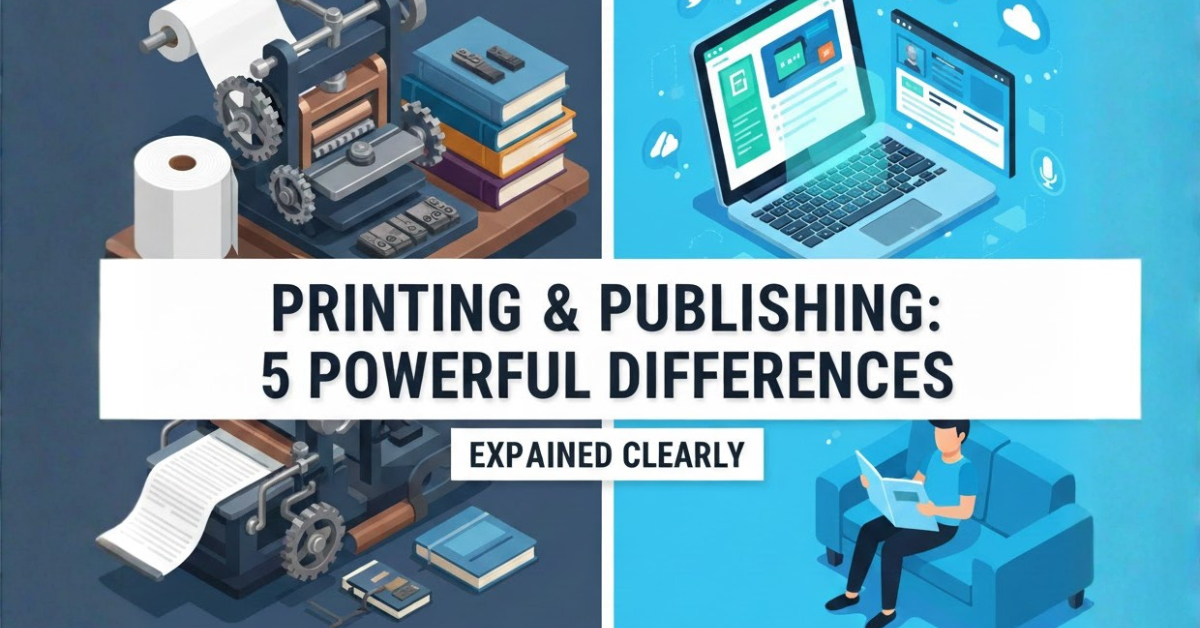
In the world of books and content production, two terms you often encounter are printing and publishing. While they are closely related, the difference between printing and publishing is significant, especially when you are navigating your journey as an author or a creator. Whether you’re in the business of book printing or considering how to get your work published, understanding the distinction between these two processes is crucial.
At first glance, printing and publishing might seem interchangeable, but they involve separate steps in the creation and distribution of a book or any written material. Let’s dive into the difference between printing and publishing, explore the processes, and clarify how these two aspects of the industry work together to get your work out to the public.
What is Printing?
Printing refers to the physical process of producing copies of content on paper or other materials. This process involves transferring text, images, and graphics onto a physical medium, typically using machines like printing presses or digital printers. The goal of printing is to create physical copies of a manuscript or artwork that can be distributed, sold, or shared.
There are different methods of printing, including offset printing (used for large runs of books) and digital printing (ideal for smaller runs or print-on-demand services). Both methods have their strengths, depending on the quantity and type of content being printed. While printing plays a critical role in the final product, it is not the only step in the process of bringing a book to market.
Types of Printing:
- Offset Printing:
- This is the traditional method used by publishing houses for mass production.
- Large quantities of copies are printed at once, making it ideal for large-scale book releases.
- This is the traditional method used by publishing houses for mass production.
- Digital Printing:
- More efficient for smaller print runs, this method is becoming increasingly popular in the self-publishing world.
- With digital printing, authors can use print-on-demand services, where copies are printed only when ordered, reducing costs.
- More efficient for smaller print runs, this method is becoming increasingly popular in the self-publishing world.
- Print-on-Demand (POD):
- A modern development that allows books to be printed only when someone orders a copy, avoiding the costs of mass production and unsold inventory.
- A modern development that allows books to be printed only when someone orders a copy, avoiding the costs of mass production and unsold inventory.
What is Publishing?
Publishing, on the other hand, is the process of preparing and distributing content for public consumption. It goes beyond simply printing a book—publishing involves the entire journey from manuscript creation to marketing and distribution. The publishing process includes editorial work, design, marketing, distribution, and rights management.
A publishing company or an author using self-publishing methods takes the manuscript, handles its production (including printing), and ensures it reaches an audience. The publishing process also includes managing copyrights and handling the distribution to bookstores, online retailers, and other outlets.
Steps in the Publishing Process:
- Editing:
- The manuscript goes through various stages of editing, including developmental editing, copyediting, and proofreading, to ensure the content is polished.
- The manuscript goes through various stages of editing, including developmental editing, copyediting, and proofreading, to ensure the content is polished.
- Designing:
- Book covers, layout, and formatting are all part of the publishing phase, making sure the book looks visually appealing and easy to read.
- Book covers, layout, and formatting are all part of the publishing phase, making sure the book looks visually appealing and easy to read.
- Distribution:
- Once the book is ready, publishing involves getting it into the hands of readers, whether through bookstores, online retailers, or other channels.
- Once the book is ready, publishing involves getting it into the hands of readers, whether through bookstores, online retailers, or other channels.
- Marketing and Promotion:
- A major part of the publishing process is marketing. Whether it’s through traditional methods or social media campaigns, publishers or authors must promote the book to reach a wide audience.
- A major part of the publishing process is marketing. Whether it’s through traditional methods or social media campaigns, publishers or authors must promote the book to reach a wide audience.
- Copyright and Licensing:
- Publishers handle the legal aspects of the book, ensuring the author’s work is protected and licensed appropriately.
- Publishers handle the legal aspects of the book, ensuring the author’s work is protected and licensed appropriately.
Key Differences Between Printing and Publishing
1. Scope of the Process
- Printing is a single aspect of the overall process that involves creating physical copies of a book.
- Publishing, however, is a more comprehensive process that includes everything from editorial work, design, and marketing to distribution and copyright management.
2. Role of Authors and Publishers
- With printing, authors or publishers choose the appropriate printing method based on the type of content and the number of copies needed.
- In publishing, authors either work with a publishing house or use self-publishing platforms to take care of the larger steps that bring a book to the public.
3. Time Frame
- Printing is typically a shorter process. Once the book is finalized, it can be printed quickly, especially with digital printing.
- Publishing can take months, especially if it includes multiple rounds of editing, designing, marketing, and distribution.
4. Costs and Profit
- Printing costs are generally fixed, depending on the quantity of books being printed and the type of printing process used (offset or digital).
- Publishing costs can vary greatly, especially if you’re working with a traditional publisher who handles everything. Self-publishing often requires upfront costs for things like editing, cover design, and distribution fees, but authors retain a larger share of royalties.
5. Control and Ownership
- Printing gives authors limited control, as it focuses only on producing physical copies of the book without handling rights or ownership.
- Publishing involves legal ownership, copyrights, ISBN registration, and distribution rights, which determine how and where the content is sold and reused.

The Relationship Between Printing and Publishing
Although printing and publishing are distinct processes, they are closely related and work hand-in-hand. Printing is an integral part of the publishing process, particularly when it comes to producing physical copies of a book. However, the role of a publisher goes far beyond just printing; it includes managing every aspect of a book’s life cycle, from creation to distribution and beyond.
In modern publishing, digital and print-on-demand services have become key players, allowing authors to print their books only when needed. These services allow for more flexibility and control, particularly for self-published authors who want to maintain ownership over their work and profits.
The Cost of Printing vs. Publishing
Printing Costs:
Printing costs generally depend on factors like the number of copies being printed, the type of printing method (offset vs. digital), and the materials used. For large print runs, offset printing can be cheaper, while digital printing or print-on-demand services tend to have a higher cost per unit but offer greater flexibility.
Publishing Costs:
Publishing costs can vary widely. For traditional publishing, the costs are often covered by the publisher, but in self-publishing, authors need to cover expenses for editing, cover design, marketing, and distribution. In both cases, these costs are typically higher upfront compared to printing alone, but the potential for royalties is much greater.
Conclusion
Understanding the difference between printing and publishing is essential for any author or creator looking to navigate the world of books and content production. While printing focuses on creating physical copies of content, publishing encompasses a much broader process that involves editing, designing, marketing, and distributing the work. These two components are connected, and a solid understanding of both will help authors make informed decisions on how to bring their works to life.
Whether you’re opting for traditional publishing, self-publishing, or print-on-demand services, knowing the differences between printing and publishing will allow you to manage your expectations and make the most of your publishing journey.
Frequently Asked Questions (FAQs)
1. What’s the difference between printing and publishing?
Printing is the process of physically creating books, while publishing involves the full process of preparing, producing, and distributing content for public consumption.
2. Can I publish a book without printing it?
Yes, you can publish a book digitally, which means it’s available online without ever needing to print a physical copy. This is common in e-books and digital publishing.
3. What are the costs associated with printing and publishing?
Printing costs depend on the number of copies produced and the printing method (offset vs. digital). Publishing costs vary depending on whether you’re working with a traditional publisher or self-publishing, including services like editing, design, and marketing.
4. Is printing more expensive than publishing?
Printing costs are generally more predictable and can be more affordable with print-on-demand options. Publishing often involves higher initial costs due to editing, marketing, and distribution services, but the potential for higher royalties exists in self-publishing.
5. How does self-publishing differ from traditional publishing?
Self-publishing is when an author handles most aspects of the book’s creation and distribution, often with the help of print-on-demand services. Traditional publishing involves working with a publishing house that handles most of the book’s process, including printing, marketing, and distribution.